Focus · 5 min read
How to Read a Nootropic Supplement Facts Label
Reading a nootropic supplement facts label can feel like deciphering a complex code, but it’s an essential skill for anyone looking to make informed choices about their cognitive health. This guide will walk you through each critical section of a nootropic supplement label, helping you understand exactly what you're taking, why, and what to look for. By the end, you'll be equipped to distinguish between established evidence, preliminary research, and areas where scientific understanding is still developing.
By Vibe Editorial Team · Published 2026-10-14 · Updated 2026-10-14
TL;DR
- Nootropic supplement labels contain crucial information about ingredients, dosages, and manufacturing. You need to understand these details to make informed decisions.
- Focus on active ingredients, their forms, and the per-serving amount to assess efficacy.
- Look for third-party testing and certifications to gauge product quality and purity.
- Distinguish between well-researched ingredients and those with preliminary or emerging evidence.
- Always consult with a healthcare professional before starting any new supplement regimen.
The Importance of the Supplement Facts Panel
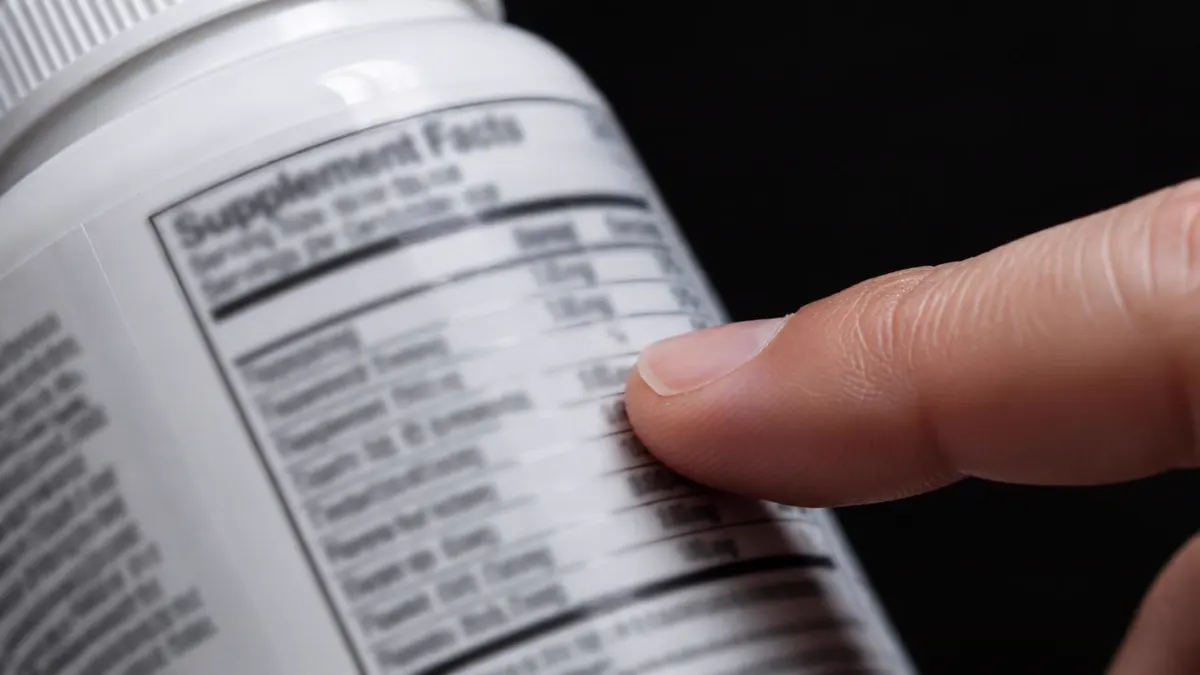
The Supplement Facts panel is the most critical section of any nootropic product. It’s mandated by the FDA and provides a transparent look into the product’s composition. This panel lists all active ingredients, their amounts per serving, and sometimes the daily value percentages.
Understanding this panel allows you to compare different products accurately, identify potential allergens, and ensure you are getting the desired dosages of specific compounds. It also helps in avoiding proprietary blends that don’t disclose individual ingredient amounts, making it harder to assess their efficacy.
Beyond the active ingredients, the panel also typically includes information about other ingredients, such as binders, fillers, and flow agents. While these are usually inert, knowing their presence can be important for individuals with sensitivities or specific dietary preferences. A thorough review of this section forms the bedrock of responsible supplement use.
Decoding Active Ingredients and Dosages
The heart of any nootropic label is its list of active ingredients. For each ingredient, you'll find its name, often its specific form (e.g., L-Theanine, CDP-Choline, Lion's Mane mushroom extract), and the quantity per serving. Pay close attention to the form, as different forms of the same ingredient can have varying bioavailability and effects.
The dosage per serving is crucial. Researching the clinically studied dosages for each ingredient can help you determine if a product provides an effective amount. Some products may contain ingredients in amounts too low to be beneficial, often referred to as 'pixie dusting.' Compare the stated dosage with reputable scientific literature or established guidelines.
For ingredients like botanical extracts, standardization is key. A standardized extract means a specific percentage of the active compound is guaranteed (e.g., 'Bacopa Monnieri Extract (50% bacosides)'). This ensures consistency and potency. If an extract isn't standardized, its effectiveness can vary greatly from batch to batch.
Understanding Proprietary Blends
Many nootropic supplements use proprietary blends, which list a group of ingredients with a total combined weight, but not the individual amounts of each ingredient within the blend. While companies sometimes cite intellectual property as the reason for proprietary blends, it can make it difficult for consumers to know the precise dose of each component.
When evaluating a proprietary blend, look for blends that at least disclose the total weight of the blend and the ingredients in descending order of predominance. This still doesn't give you exact numbers, but it offers a better idea of what constitutes the bulk of the blend. Ideally, fully transparent labels that list each ingredient and its exact dosage are preferable.
The presence of a proprietary blend doesn't automatically mean a product is ineffective, but it does require a more careful assessment. If a blend contains ingredients with known effective dosages, and the total blend weight is sufficient, it might still be beneficial. However, without individual amounts, it's harder to replicate or fine-tune your supplement regimen.
Other Ingredients and Quality Indicators
Beyond the active nootropics, the 'Other Ingredients' section lists everything else in the supplement, such as gelatin (for capsules), cellulose, magnesium stearate, or silicon dioxide. These are often excipients that aid in manufacturing or product stability. While generally harmless, individuals with allergies or dietary restrictions (e.g., vegetarian, vegan) should review this list carefully.
Quality indicators on a label can include third-party testing certifications (e.g., NSF, USP), cGMP (current Good Manufacturing Practices) compliance, and statements about allergen-free status. These external certifications provide assurance that the product has been tested for purity, potency, and freedom from contaminants.
Some labels may also mention 'non-GMO,' 'gluten-free,' or 'organic' status, which can be important for certain consumers. While these aren't directly related to nootropic efficacy, they speak to the overall quality and care taken in sourcing and manufacturing. NeuroSpark, for instance, focuses on quality sourcing to provide caffeine-free daily focus support for healthy adults.
Limitations and What We Don't Know
Despite extensive research, there are still limitations to our understanding of nootropic supplements. Many ingredients have promising preliminary research, often conducted in animal models or small human trials, but lack large-scale, long-term studies to confirm efficacy and safety in diverse populations.
The interplay between different nootropic compounds in complex formulas is also not fully understood. While synergy is often claimed, the exact mechanisms and optimal ratios for combined ingredients are still active areas of research. This means that a blend that looks good on paper might not always translate to the expected real-world effects.
Furthermore, individual responses to nootropics can vary significantly due to genetics, lifestyle, diet, and other physiological factors. What works well for one person may have minimal effect on another. The long-term effects of consistent nootropic use, especially with novel compounds, are also not fully established, underscoring the need for ongoing research and a cautious approach to supplementation.
Therefore, while a label provides critical information, it doesn't tell the whole story of how a supplement will interact with your unique biochemistry. Always approach nootropic supplementation with a mindset of informed experimentation, preferably under professional guidance.
When to Talk to Your Doctor
Before beginning any new supplement, especially nootropics, it is always recommended to consult with a licensed healthcare professional. This is particularly important if you have pre-existing medical conditions, are taking any medications (prescription or over-the-counter), or are pregnant or breastfeeding.
A doctor can help you assess the potential benefits and risks of specific ingredients based on your health profile. They can also advise on potential interactions between supplements and your current medications, ensuring your safety and optimizing your health outcomes. Self-diagnosing or self-treating any condition with supplements is not advisable.
If you are considering nootropics to address specific concerns like focus, memory, or mood, discussing these with your doctor is paramount. They can help identify underlying causes and recommend the most appropriate course of action, which may or may not include dietary supplements. Decisions about medication, including those for conditions like ADHD, belong solely with a licensed clinician.
Sources
NIH Office of Dietary Supplements fact sheets on individual vitamins, minerals, and botanicals
NCCIH (National Center for Complementary and Integrative Health) resources on dietary supplements
FDA guidance on dietary supplement labeling and regulations
CDC (Centers for Disease Control and Prevention) health and nutrition guidelines
Peer-reviewed systematic reviews and meta-analyses on cognitive enhancing ingredients
Academic journals specializing in nutrition, neuroscience, and pharmacology
Keep going
Frequently asked
- What is the most important part of a nootropic supplement label?
- The most important part of a nootropic supplement label is the 'Supplement Facts' panel, as it lists all active ingredients, their forms, and precise dosages per serving.
- How can I tell if a nootropic dosage is effective?
- You can tell if a nootropic dosage is effective by comparing the amount listed on the label with clinically studied dosages found in reputable scientific literature or established guidelines for that specific ingredient.
- What should I look for regarding product quality on a nootropic label?
- Regarding product quality, look for indications of third-party testing certifications (like NSF or USP), cGMP compliance, and statements about allergen-free status or purity on the nootropic label.
- Are proprietary blends on nootropic labels a problem?
- Proprietary blends can be problematic because they don't disclose the individual amounts of each ingredient, making it difficult to assess specific dosages and efficacy, although some still list ingredients in order of predominance.
- When should I talk to my doctor about nootropic supplements?
- You should talk to your doctor about nootropic supplements before starting any new regimen, especially if you have existing health conditions, are taking medications, or are pregnant or breastfeeding, to ensure safety and appropriateness.
- What does 'standardized extract' mean on a nootropic label?
- A 'standardized extract' on a nootropic label means that a specific percentage of the active compound (e.g., bacosides in Bacopa Monnieri) is guaranteed in the extract, ensuring consistent potency and effect.
Tags
From the Learn hub
More from the blog
About the author
Vibe Editorial Team
In-house editorial collective, Vibe Premium Supplements
The Vibe editorial team writes and fact-checks every article on vibesupp.com. We work directly with our product and formulation team to keep ingredient, dosing, and safety language consistent with what is printed on our Supplement Facts panel and our published research notes. All content is supplement-compliant and reviewed against current FTC and FDA guidance for dietary supplement marketing.
View profile →Part of the Nootropic Ingredients & Evidence hub in the Focus Library.
Educational content only. These statements have not been evaluated by the FDA. This product is not intended to diagnose, treat, cure, or prevent any disease.